The Work
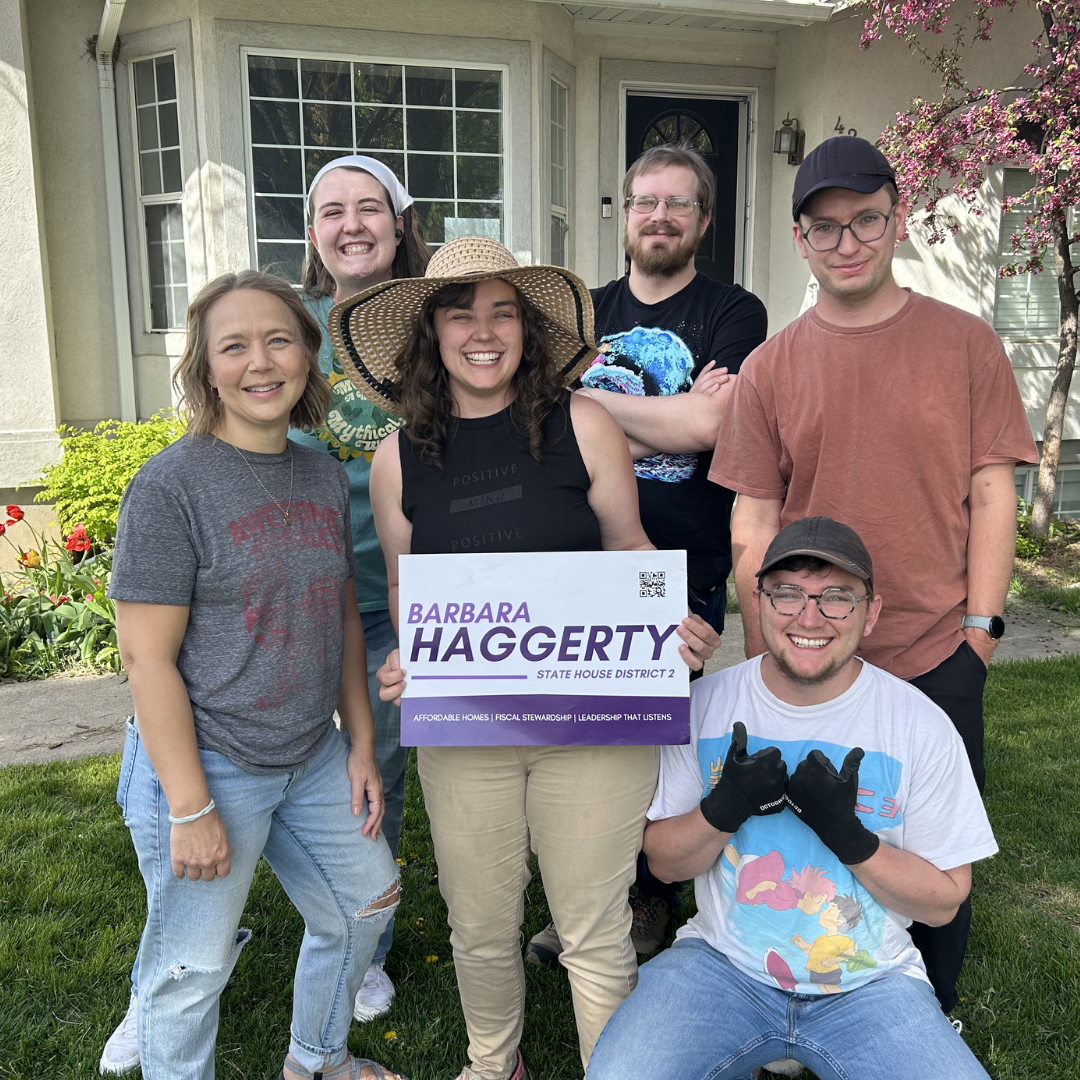
You might have noticed a large gap of time between this post and the previous one. The reason behind this gap is the work that I’ve been doing to connect with experts, voters, and city officials to get this whole thing moving. To a lot of people, I am an unknown. It doesn’t matter that my friends and family know who I am, the values I hold, and how sincerely I believe that I can help bring positive change to Cache Valley. Not to people who have never met me before, anyway.
So I’ve been working around the clock to get my name out and not just tell people I’m here to do the work, but to prove to people I’m doing the work. That’s a large part of why I’m running. I know I have plenty to complain about when it comes to my opponent, but I want to make it abundantly clear here that I do not think he’s some evil force sent from wherever to make our lives miserable. He’s human. There are plenty of areas where he and I can agree, and I see that in the way that he votes. The thing that he lacks is the ambition and commitment to be a squeaky wheel for rural northern Utah. Families are being priced out of the towns they grew up in and he hasn’t even talked about it; not anywhere I can find, anyway. The Great Salt Lake is shrinking and there is very clear data as to how Cache Valley can turn that around and boost not just our own economy, but Utah as a whole.
And I’ve not heard a single solution from him.
So that’s the gap I’m here to close.
I have solutions for some crisis and the ones I don’t have solutions for, I’m working on day and night.
Two days ago, I met with an expert on our water situation. I learned that the Bear River is 50% of the Great Salt Lake's inflow and that watershed UP HERE has some of the greatest impact on why it's shrinking. Agriculture bleeds the river dry, but our farmers aren't the ones to blame. Our farmers are trying to get in a noble profession, once known as "the backbone of America," that has been targeted and bastardized by a federal government that incentivizes our dependence on a globalized supply chain instead of the people who grow locally. So what if the state stepped in instead? What if the billions and billions of dollars invested into symptomatic treatment of our water crisis were actually invested in upgrading farms to have more efficient watering systems? What if the state rewarded more diverse crops to support their communities instead of spend OUR resources to benefit out-of-state interests?
The numbers are clear as day: when farmers are given what they need to thrive, the communities around them find themselves with better food, boosted economic health, and a significant decrease in food scarcity for low-income residents.
A week ago, I had a phone call that stitched up the holes in my housing policy. I’m no expert in housing and I will never pretend to be one. I’m not a real estate agent or a construction worker. There are plenty of things I don’t know, but I knew who to call to get those answers. I’ve spent hours and HOURS on the phone with real estate agents, builders, brokers, and buyers to get the view on all sides.
I found out that it’s money.
The reason we keep seeing townhomes that cost nearly half a million dollars?
That’s something that large (out-of-state) companies with the capital to just buy the land want to build because they can put 40 townhomes down in a space that should only hold 10-15 homes. And the reason they’re so obsessed with places like rural Utah is because there is LAND here, so much of it and so much opportunity for them to make bank. They don’t care that we’ve built a community that cares for each other. They don’t care that we value looking up at the stars. They don’t care that we do not want to lose our view of the mountains. They want money.
So why don’t local builders get a loan to buy the property to build?
Banks won’t give out loans for affordable housing. The numbers game dictates that if they can sell something that people can’t afford, they can sell it twice. Once during the original purchase, and a second time after they foreclose on the house and evict the family.
It’s not supply and demand; this is what happens when outside money stops competing fairly with local families and businesses.
If we want to preserve Cache Valley, we need state-level investment in our growth and housing. We CAN have affordable housing and there ARE builders willing to give us those homes. Those homes will boost our economy, make our communities safer (because renters come and go, but owners invest in their community), and keep Cache Valley rural.
When I say $300k starter homes are possible, I mean it. There is a builder in our area that has floor plans ready for standalone homes that look like they belong here, but he doesn’t have the capital to buy large parcels of land and the bank won’t give it to him because they can’t make more than their fair share off of them. Wouldn’t it be nice if there were a rural-specific program that would grant him a loan to compete with the bigger companies? Wouldn’t it be even better if that grant came from a recyclable fund that would only need a one-time funding mechanism from the state before it breathed on its own? And wouldn’t it be especially nice if that very same fund would only require buyers to qualify for 70% of the home price?
It’s not a fantasy. I’ve run the numbers, I’ve spoken to experts, and I’ve stress-tested this plan from here to next year. On paper, it works. The experts say it works.
We just have to try it.
And in the end, what’s the worst that could happen? This doesn’t work and we end up with more townhomes? Isn’t that where we’re headed already?
My ask to you is this: put someone in office who is willing to fight for the right to try something new and get us out of this mess without sacrificing what matters here.
Yes, that someone is me. My opponent has had three terms to show you what he intends to do in office. I want to show you what it’s like to have someone fight for YOU. Not a party and not an ideology. But for YOU.